The Rural Double Rainbow: economic development, retail chains and local businesses
Erik Reader is a rural friend of ours, and much like us, out there everyday doing his best to make a difference and help somebody out. Erik is the president of Reader Area Development , and is a downtown revitalization professional with more than 15 years of hands-on experience working inside the realities of small towns. He shared this piece he wrote with us, and we think you might like it too.
Driving Route 30 across northern Illinois, it starts to feel like rural America has settled on a very specific development strategy.
Put a Casey’s on the edge of town. Add a Dollar General nearby. If things are really moving, maybe throw in a Subway or a gas station casino for good measure.
At some point during my recent drive from Peoria, Illinois, to Geneva, Illinois, I realized I’d seen this same pattern over and over again in Illinois communities like Shabbona, Waterman, and Hinckley. The buildings changed slightly. The signs changed colors. But the formula stayed remarkably consistent. Fresh concrete, large parking lots, bright corporate branding, and highway visibility now define the commercial gateways of many small towns.
The older downtowns tell a different story.
Former hardware stores sit quiet. Old grocery buildings wait for a second life. Some storefronts are occupied, some are hanging on, and some are simply holding memories. Many of these places still have great bones, but the economic systems that once supported them have weakened over time.
One photo from the trip captured the entire experience perfectly: a newly built Dollar General sitting directly beside a new Casey’s at the edge of town in Hinckley. I jokingly started calling it “The Rural Double-Rainbow.” At first it felt funny in the same way people laugh at oddly specific moments of Midwestern development repetition. But the longer I looked at it, the more it felt like a serious question hiding in plain sight: is this an economic development jackpot or just a mirage?
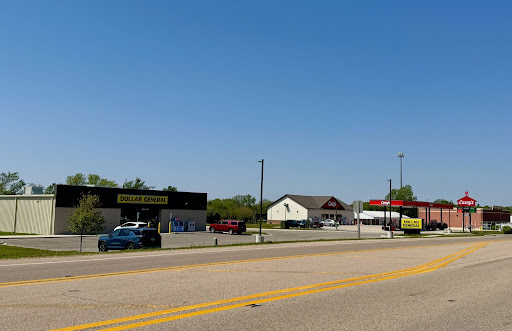
Photo by Erik Reader, from Reader Area Development, Inc.
On paper, these chain stores check a lot of boxes.
- New investment.
- New construction.
- Sales tax revenue.
- Jobs.
- Activity.
- Bright lights where there was once an empty field.
For many rural communities, landing a Casey’s or Dollar General feels like proof that the town is still economically viable.
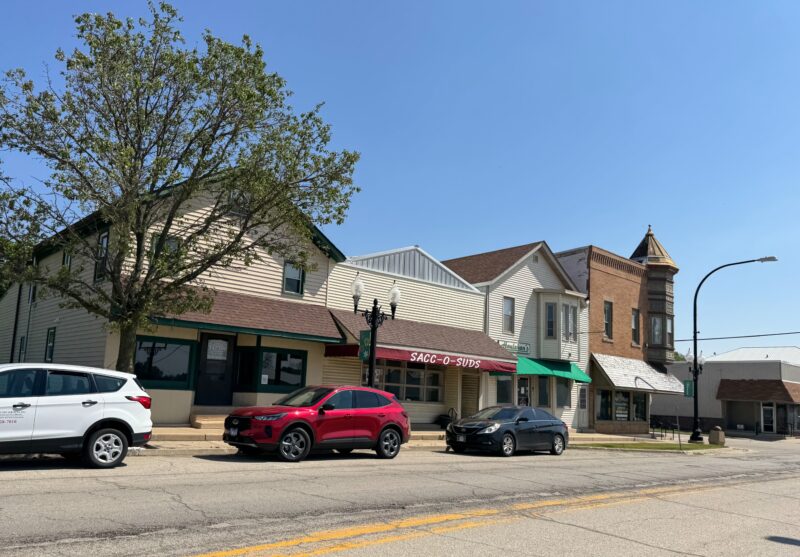
Photo by Erik Reader
The easy version of this dead downtown conversation is to blame the chains. That’s also the least useful version.
I don’t think what these stores are doing is particularly healthy for many small towns over the long term. At the same time, I completely understand why they succeed. If your town’s lost its grocery store, pharmacy, hardware store, or discount retailer, a Dollar General becomes less of a choice and more of a practical necessity.
These companies didn’t create every challenge facing rural communities. In many cases, they simply figured out how to operate successfully in places where local business ecosystems had already become fragile. That distinction matters.
Research from the Institute for Local Self-Reliance and the USDA has shown that dollar stores can weaken local grocery systems and make it harder for independent businesses to survive, especially in smaller rural communities where there may not be enough customer demand to support multiple retailers. Once a town loses a locally owned grocery or hardware store, it rarely gets another chance to replace it.
Still, the reason these chains continue expanding is simple: they work.
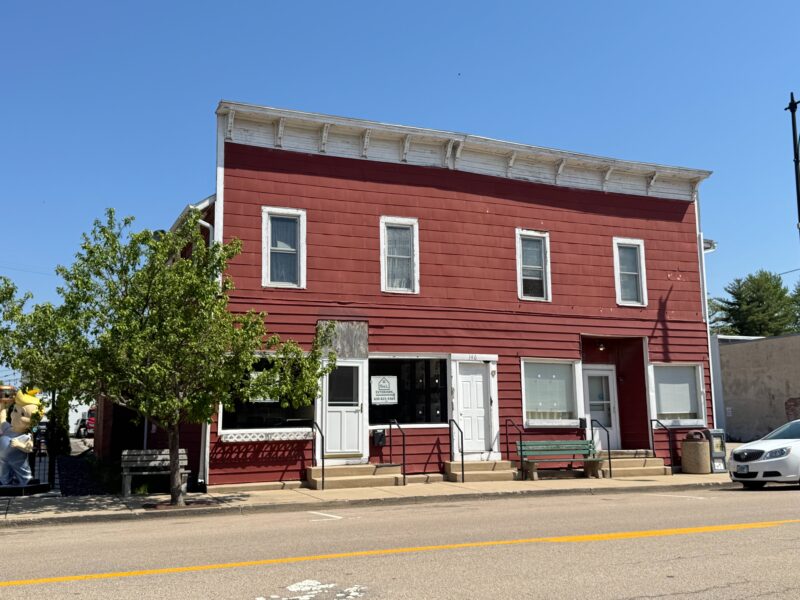
Photo by Erik Reader
They understand logistics, convenience, consistency, and customer behavior better than most independent businesses ever could. They know how to scale operations, control inventory, simplify staffing, and create predictable experiences. Rural residents aren’t shopping there because they suddenly stopped caring about their communities. They shop there because the stores are nearby, open, affordable, and easy.
That realization brought me back to where I grew up in Geneva, Illinois, just a few miles from Aldi’s U.S. headquarters and distribution operations in Batavia. Growing up, Aldi had a reputation as the “cheap grocery store.” Back then, Aldi always felt low quality to me. Then I studied abroad in the Netherlands and realized Aldi-style stores were everywhere.
The simplicity wasn’t accidental.
- It was operational discipline.
- Limited inventory reduced complexity.
- Smaller store footprints lowered overhead.
- Strong logistics kept prices competitive.
- Customers trusted the experience because they knew exactly what they were walking into every time.
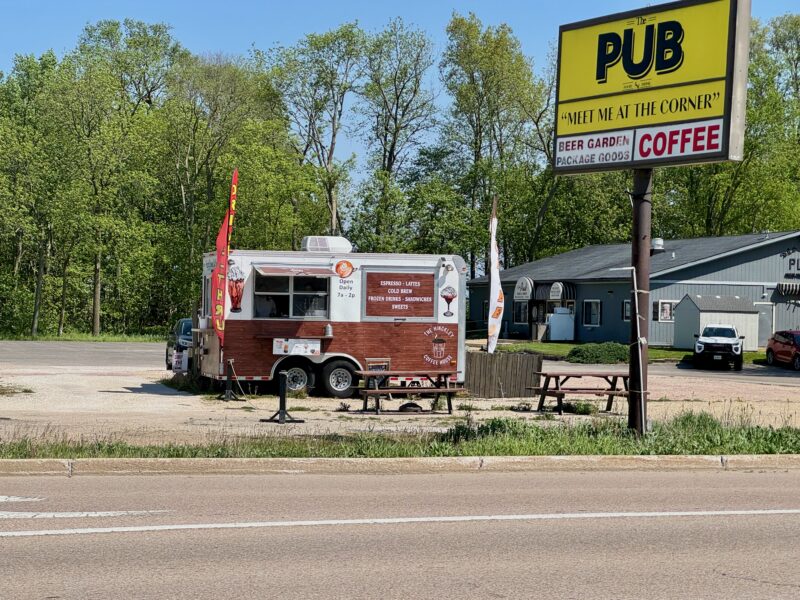
Photo by Erik Reader
That’s when I started to understand something important: simplicity scales.
Many rural communities, meanwhile, still approach economic development as a collection of disconnected projects. They create plans, hold meetings, organize workshops, and search for grants, but often struggle to build repeatable systems that actually support entrepreneurship and reinvestment over time.
The chains succeeded because they focused on execution.
That doesn’t mean small towns should try to become chains. In fact, the opposite’s true. Rural communities still possess something national brands can never fully replicate: identity, local ownership, history, relationships, and a genuine sense of belonging. The challenge is that those strengths alone are no longer enough to sustain a local economy.
Consumers make decisions based on convenience, price, predictability, and habit.
Walmart mastered that reality years ago. Casey’s mastered it by becoming part gas station, part pizza restaurant, part grocery stop, and part community utility. Even Trader Joe’s, which I stopped at on my way home to Batavia, understands this at an entirely different level.
Every time I’m back in the area, I stop there. My wife sends me a shopping list before I even leave the driveway. Trader Joe’s has built a following so loyal that people will gladly fight through crowded parking lots and long checkout lines just to grab snacks, frozen meals, or seasonal items they can’t get anywhere else.
What Trader Joe’s sells better than groceries is identity.
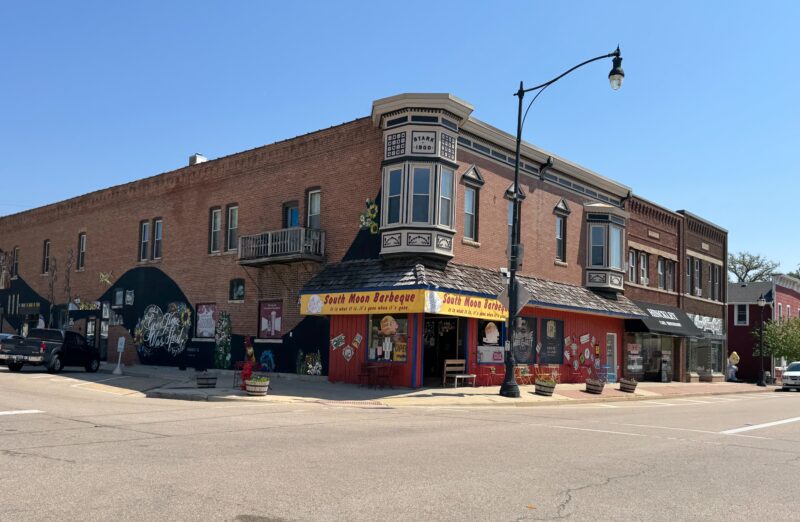
Photo by Erik Reader
People want places that feel distinct and memorable. They want businesses that create an experience and give them a reason to return.
That’s one reason many tourist communities still support strong local retail districts. They offer products, food, or experiences that stand out from the sameness people encounter everywhere else.
Years ago, small towns naturally created that feeling because local businesses reflected the personalities of the people who owned them. There were candy stores, toy stores, hobby shops, bakeries, hardware stores, and small retailers that added variety and life to downtown streets. Some of those businesses probably couldn’t survive today as standalone operations, but many could still work as part of a larger ecosystem built around food, entertainment, events, housing, and tourism.
The problem isn’t that rural America lost every opportunity. The problem is that many communities lost the systems that allowed local ownership to reproduce itself.
That’s why the Hinckley Fresh Market stood out to me during this drive. It wasn’t trying to recreate the past. It felt practical, visible, and grounded in the reality of how people shop today. More importantly, it felt like an attempt to compete instead of simply preserve.
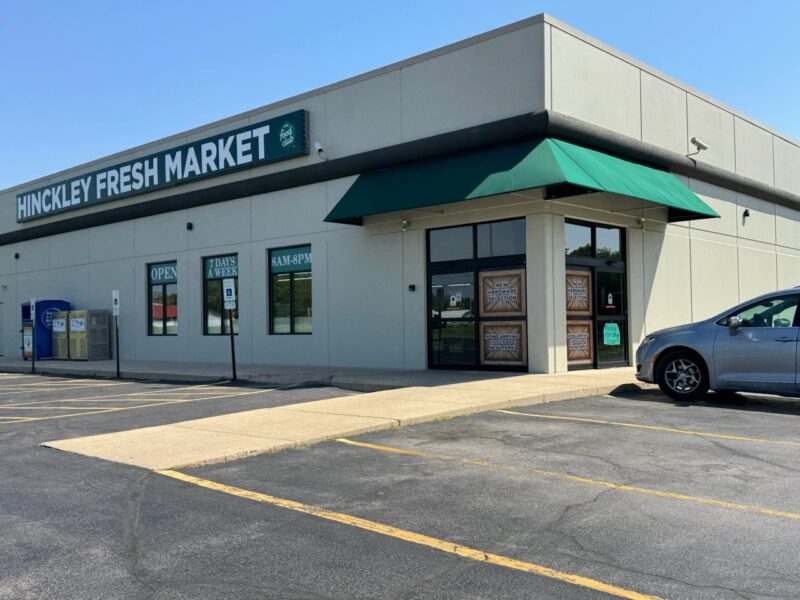
Photo by Erik Reader
Small towns don’t need another generation of studies explaining what they already know. Most communities understand that they need stronger downtowns, more housing, better businesses, and more activity. The harder question is how to create systems that make those things possible at a local level.
Part of the answer may involve using the very success of chains to help fund local reinvestment.
In Illinois, tools like Business Development Districts can capture a portion of sales tax revenue from edge-of-town commercial growth and redirect some of those funds back into downtown redevelopment, entrepreneurship programs, façade improvements, upper-floor housing, and business incubation.
Communities shouldn’t be forced to choose between economic activity on the highway and investment in the historic core. The goal should be creating a stronger connection between the two.
The towns I drove through on Route 30 aren’t dead towns. In many ways, they’re still remarkably intact. The street grids still work. The downtown buildings are still there. The scale remains walkable and human. What they need now are systems that help local businesses succeed in the same disciplined way chains do.
Rural communities can’t out-chain the chains, and they shouldn’t try. But they can absolutely learn from what made those companies successful in the first place.
Strong logistics, consistent branding, operational simplicity, customer trust, and repeatable experiences aren’t corporate-only ideas.
They’re lessons that can work in any community willing to think beyond nostalgia and focus on execution.
The future of rural America won’t look exactly like the past, nor should it. But somewhere between Dollar General and Trader Joe’s may be a roadmap worth paying attention to.